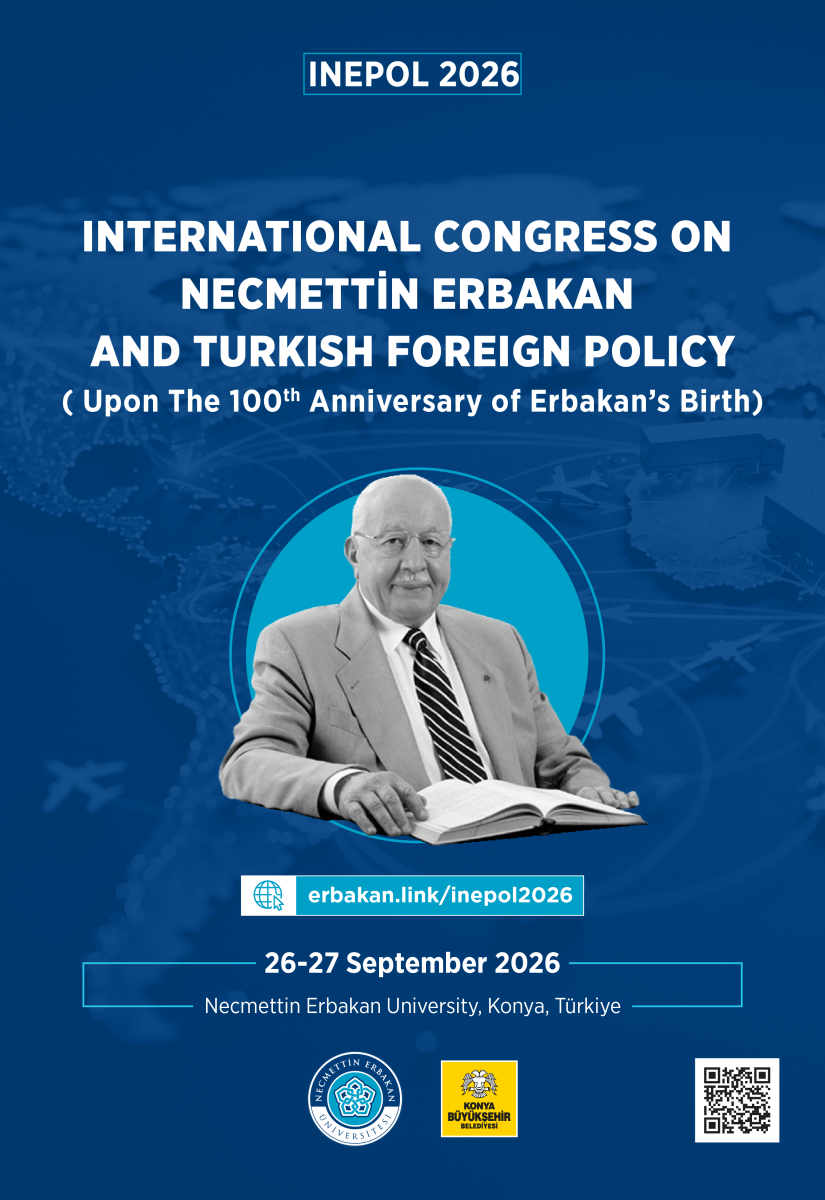
Beyond his title of "Hodja" earned as a scientist, Necmettin Erbakan was an engineer, entrepreneur, and civil society leader, in addition to his well-known identity as a politician. Above all, Erbakan was an organizer; in fact, he was an organization unto himself. The personal discipline and piety he maintained without compromise until the last moment of his life inevitably rendered Erbakan's understanding of politics "universal" (cihanşümul)—or global, in today's terms—beyond the policies of any nation-state. This vision came to the fore most prominently in his Islamic-centered foreign policy proposals; while it naturally subjected Turkish Foreign Policy to a critical reading, it also offered a "bundle of opportunities" whose value would only be realized later. The theoretical and practical foreign policy stance of the Milli Görüş Movement, which Erbakan headed until his death, and his political parties—each of which was replaced by a new one as they were closed—deserve more scrutiny today, both regarding their time in coalition governments and while in opposition. In this context, our Congress, held in partnership with Necmettin Erbakan University and Konya Metropolitan Municipality, is open to papers examining the contributions of Erbakan, the Milli Görüş Movement, and the political parties upon which it was built, to foreign policy, focusing primarily on the themes mentioned above within an international congress event.